 PromptDirectorEN免费安装插件
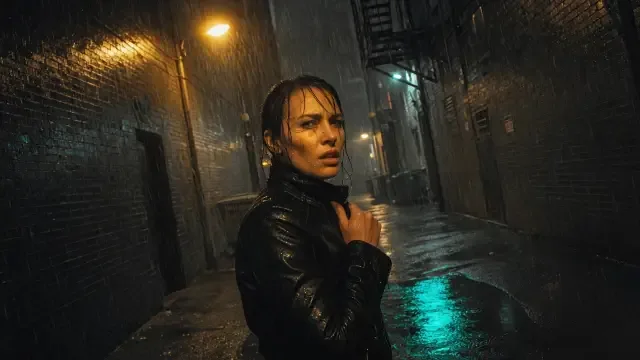
Palette
完整提示词
Palette Palette as location or story state A color palette in color palette cinematography is a restricted set of hues used as law across set, costume, light, and grade. Too many colors would be noise; a few chosen hues do all the work and can mark location, timeline, or story state. Create this Palette Narrative function Design as law. A yellow desert chapter, a red-cloth lie, a mint hotel: the audience learns the rule and then feels the break. Traffic can tint strands so you know which plot you are in. A hotel can live in pinks and purples until a new room breaks the set. It is the wrong tool when the location must keep its un-designed color science (Natural Grade). It is the wrong tool if the only restriction is no chroma (Monochrome). A Split Toning paints the curve; a palette paints the world, including walls and clothes. Palette changes should distinguish meaningful states, not create arbitrary variety. How it works Define a palette rule for each strand across set design, costume, lighting, and grading. Keep the rule stable enough to be learned before breaking it deliberately. Remove extra hues from frame (a stray neon, a blue plastic bag). Prompt: Restricted palette on [Subject], a few chosen hues doing all the work, design as law. When to use it Use it when too many colors would be noise, or when strands of a story must be recognizable by hue. Do not use it as random look-variety, and do not confuse it with a grade-only split on a messy set. Compared with similar shots Monochrome is one scale, no hue. Split Toning is highlight versus shadow in the grade. Color Shift is a change you watch. Hyper-Saturation can live inside a palette (Hero) but saturation is not the restriction. Palette is the designed set of allowed hues. Split ToningShadows and lights belong to different gods. MonochromeStrip to drawing. Teal and OrangeYou want contemporary studio punch. Use with taste. In film Hero organizes successive versions of events around changing dominant colors. The Grand Budapest Hotel runs hotel spaces as a learned set of pastels and purples. Traffic uses distinct visual color treatments for different story strands. Grammar of rules, not a still of a desert army. Traffic 2000Different story strands use distinct visual color treatments. Hero 2002Successive versions of events are organized around changing dominant colors. Prompt it Name the allowed hues and ban the rest. Restricted palette on [Subject], a few chosen hues doing all the work, design as law. List the two or three hues. Do not write mixed complementary clutter, and do not say colorful. Use in Video Generator Generate three matched views of one train-station meeting as alternate recollections: warm amber, cool blue-gray and restrained white-green. Keep blocking and character identities identical while wardrobe accents, environment and light follow each version’s palette. Assemble as distinct narrative strands rather than cycling hues within one shot. What usually goes wrong The usual wrong cousin is a Split Toning on an uncontrolled set, or a Natural Grade with a LUT. The tell is extra hues leaking from wardrobe and extras, or a grade fighting the furniture. Fix: control walls, clothes, and lights first, then grade inside that law. Questions What is a palette in film? It is a restricted set of hues used as a rule for a place, a timeline, or a story strand. Set, costume, light, and grade all obey the same few colors. Palette vs Split Toning Split toning colors highlights and shadows in the grade. A palette is designed into the world: walls, clothes, props, and lights. You can split-tone a messy full-spectrum set. A palette would not allow that mess. When should I use a palette? Use it when a few hues should do all the work, or when strands must be recognized by color. Skip it when the real location must remain undesigned. How do I prompt a palette for AI image or video? Write: Restricted palette on [Subject], a few chosen hues doing all the work, design as law. List the hues. Forbid extra colors in wardrobe and set. Melies can generate this Palette Melies is the AI filmmaking workspace. This Palette opens with the grade prompt loaded, so the look is in the photography instead of a LUT dumped at the end. Generate three matched views of one train-station meeting as alternate recollections: warm amber, cool blue-gray and restrained white-green. Keep blocking and character identities identical while wardrobe accents, environment and light follow each version’s palette. Assemble as distinct narrative strands rather than cycling hues within one shot.
归原作者或其他权利人